
Local Blue Economy Growth Fund – News
Moving Great Lakes Water Quality from “Fair” to “Good”: What We Heard in Kingston
October 06, 2026
Great Lakes communities are facing increasingly complex pressures on water quality. The State of the Great Lakes assessments indicate the status of the Great Lakes is fair and unchanging, meaning “some ecosystem components are in acceptable condition” (State of the Great Lakes).
Moving Great Lakes water quality from “Fair” to “Good” is one of the ambitious goals of the Cities Initiative’s Economic Transformation Action Plan and is a foundational objective of the Local Blue Economy Growth Fund. This is why we invited municipal leaders, stormwater and wastewater professionals, cutting-edge innovators, and leading researchers to Kingston in September for a Municipal Innovation Exchange—an opportunity to share knowledge and identify practical solutions that move the needle on Great Lakes water quality.
Here’s what we heard.
We need to work together, but differently
The challenges facing the Great Lakes are significant: urban expansion, climate change, invasive species, nutrient runoff, plastic pollution, and emerging contaminants are all threatening our freshwater resources. An estimated 10 million kilograms of plastic enter the Great Lakes each year and municipalities and First Nations are the first to feel the impacts. These challenges can feel insurmountable, but they’re not.

Keynote speaker, Blaine Stand, Director of Circular Economy and Water, Pollution Probe, speaks at the Kingston Municipal Innovation Exchange.
Keynote speaker, Blaine Stand, Director of Circular Economy and Water from Pollution Probe, noted communities have an opportunity to be leaders in this space and advocate for innovation and change, to work cooperatively and collaboratively to address upstream and downstream concerns, and to pursue policy change that advances effective water management.
Key takeaway: Meaningful progress will require collaboration across jurisdictions and sectors, rule-making that supports technology innovation, and informed policy that reflects a change in the status quo.
From data to action
For remediation actions to be effective, we need more robust data on source pollution and water quality, but we also need to do more with the data that we already collect. While we can measure water quality in the Great Lakes, it doesn’t always tell us how pollution got there, where it came from, or how to stop it.
New technologies, including machine learning and predictive platforms, are creating opportunities to better understand what has happened, what is happening now, and what could happen next, as well as where and why it’s happening.
We heard from Dr. Diane Orihel (Queen’s University) that research can also help answer questions that monitoring alone cannot. Work at the IISD Experimental Lakes Area, for example, has demonstrated the value of manipulating whole ecosystems to understand cause and effect. Research into microplastics is now building on that foundation to examine their impacts across food webs and ecosystems, to provide insight into how lakes might recover.
Key takeaway: Better data is only part of the solution. We need to connect monitoring, research, and emerging technologies to understand not just what is happening in our waters, but where pollution comes from, why it is happening, and what we can do about it.
Innovation needs incentives and adaptive policy
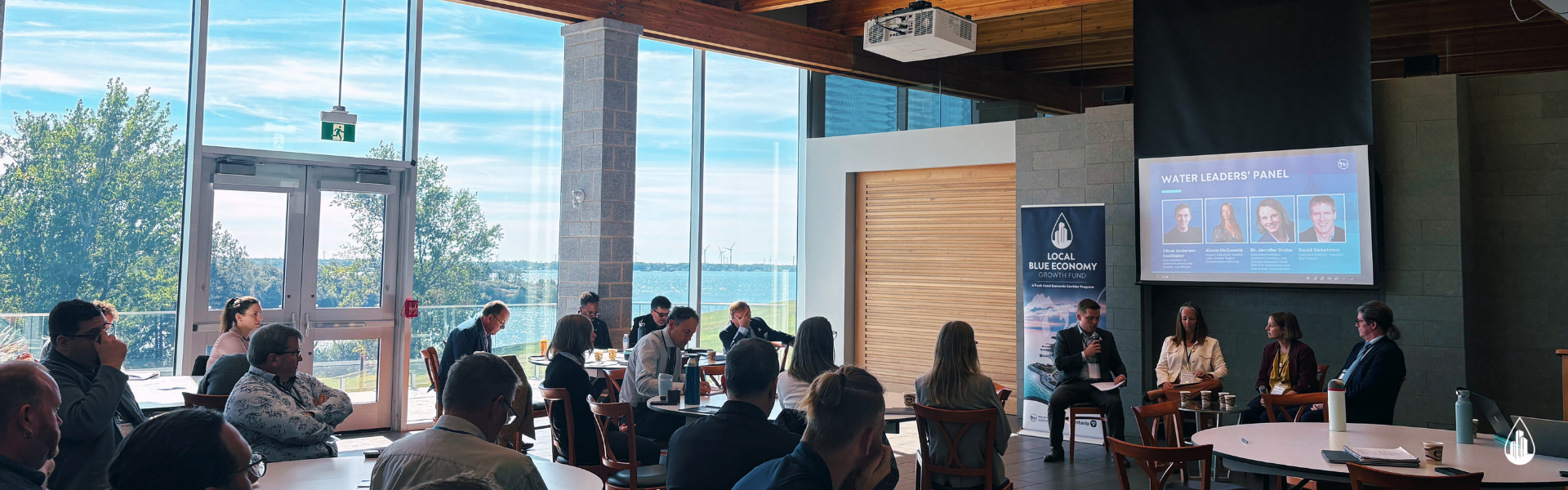
Water Leaders’ Panel (L to R): Oliver Anderson, AquaAction; Alison McDonald, Eastern Lake Ontario Region Conservation Authority; Jennifer Drake, Carleton University; David Sweetnam, Georgian Bay Forever.
Perhaps the strongest theme of the day was that existing regulatory frameworks and policy slow, if not prevent, innovation in municipal environments. But innovation needs to be tested, evaluated, and reconfigured in order to be scaled effectively.
Participants highlighted that outdated stormwater guidelines, fragmented water governance, and existing regulations often reinforce conventional approaches, rather than inspire the adoption of new techniques that could reduce costs, improve water quality, and increase efficiency over the long term.
Regulatory sandboxes were proposed as one method of overcoming regulatory challenges that could even help foster regulatory change. Water Leaders’ panelist David Sweetnam, Executive Director of Georgian Bay Forever, also spoke to the need of applying adaptive management principles to policy development. Current regulatory frameworks have entrenched yesteryear solutions, he noted. There’s currently no mechanism for legislation or policy to adapt continuously to rapidly changing conditions. Applying an adaptive management framework to policy can create a positive feedback loop whereby changes are continuously made based on new information about the most effective solutions to water quality management.
Despite restrictive regulations and policies, promising pollution capture and contaminant removal technologies are already being tested. The delegate of AquaAction water-tech entrepreneurs on-site during the event to showcase their cutting-edge technologies was a testament of that.
But innovation often runs into a familiar problem: municipalities and regulators are understandably cautious about taking risks. Incentive programs, like the Local Blue Economy Growth Fund, are needed to reduce the risk of adoption and provide the necessary conditions for innovation to thrive. But funds like these need to cover the full extent of activities, such as monitoring, data collection and analysis, and data operationalization, so that innovation and implementation is data-driven and responsive to the realities on the ground.
Key takeaway: Creating opportunities to pilot, demonstrate, and evaluate new technologies, without placing all the financial and regulatory risk on municipalities, can help bridge the gap between promising idea and scalable solution. Expanding incentives, like the Local Blue Economy Growth Fund, as well as the use of regulatory sandboxes, can reduce risk and create the space needed to advance innovation.
Innovation needs champions
No single organization or jurisdiction can solve Great Lakes water-quality challenges alone. Municipalities, First Nations, conservation authorities, researchers, engineers, innovators and community organizations each bring different knowledge, expertise and perspectives. Within each of these sectors and systems, innovation needs people who are willing to champion change.
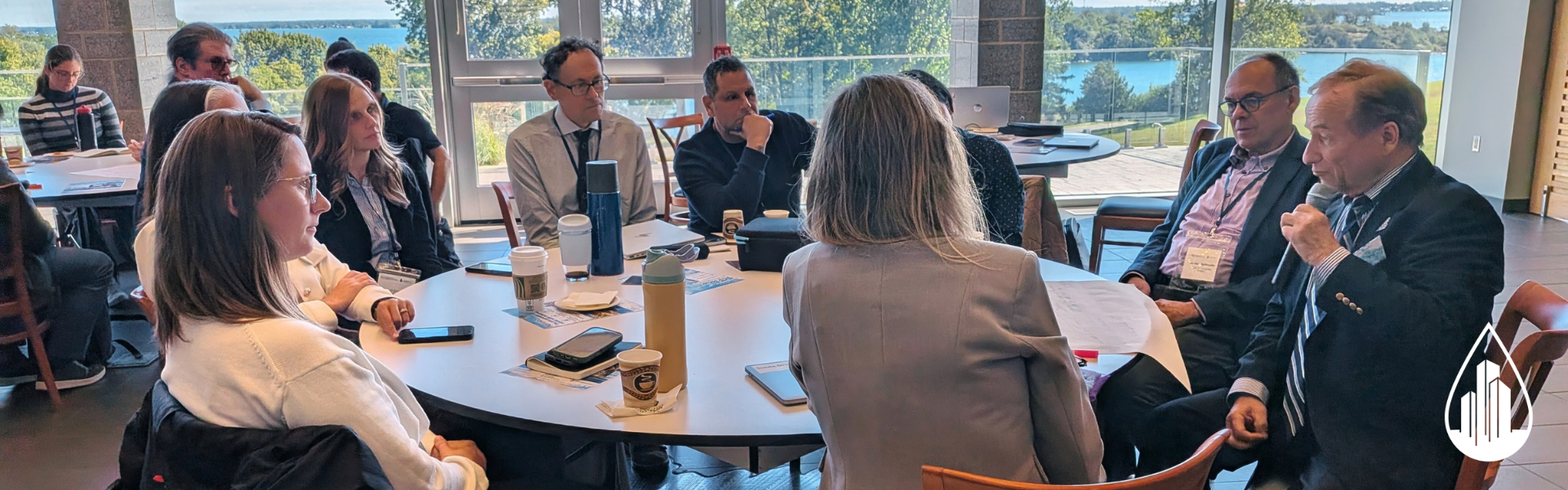
These champions can take many forms: a municipal engineer willing to test a new technology that breaks from the status quo; a planner helping an innovative project navigate bureaucracy; or a mayor or member of council willing to support a project that carries some uncertainty but has the potential for significant impact.
Key takeaway: Advancing innovation will require building a network of champions willing to move beyond the status quo, connect ideas across disciplines, and help move promising approaches from pilot to practice.
Moving from “fair” to “good”
What we heard in Kingston echoed what we heard at our MIX event in Waterloo. Water tech innovation that improves Great Lakes water quality or advances the circular economy will require collaboration across jurisdictions and sectors, supported by policies and regulatory frameworks that support innovation that moves beyond the status quo.
Better data is part of the solution, but collecting more data alone is not enough. We need to operationalize data to make smarter decisions and support testing new and innovative approaches.
We also need to make it easier and less risky to test new technologies. Incentives such as the Local Blue Economy Growth Fund and tools such as regulatory sandboxes can help bridge the gap between promising ideas and solutions ready for wider adoption.
Ultimately, moving from “fair” to “good” Great Lakes water quality will require the courage to try new approaches, the policies to support them, the data to learn from them, and the collaboration to scale what works.
Advancing the Circular Blue Economy: What We Heard in Waterloo
September 29, 2026
How can we advance the circular blue economy?
That was the question at the heart of the September Waterloo Municipal Innovation Exchange (MIX), where municipal staff, utilities, innovators, researchers, First Nations, industry, and non-profit organizations came together to explore new approaches to managing water, wastewater, and stormwater.
The conversation made one thing clear: there is no shortage of innovation or interest in doing things differently. The challenge is creating the conditions that allow new approaches to move from promising ideas to practical, real-world solutions.
Moving beyond traditional approaches
Our Water Leaders’ Panel brought together perspectives from across the water sector to explore both the opportunities and challenges associated with circular approaches to stormwater and wastewater management.
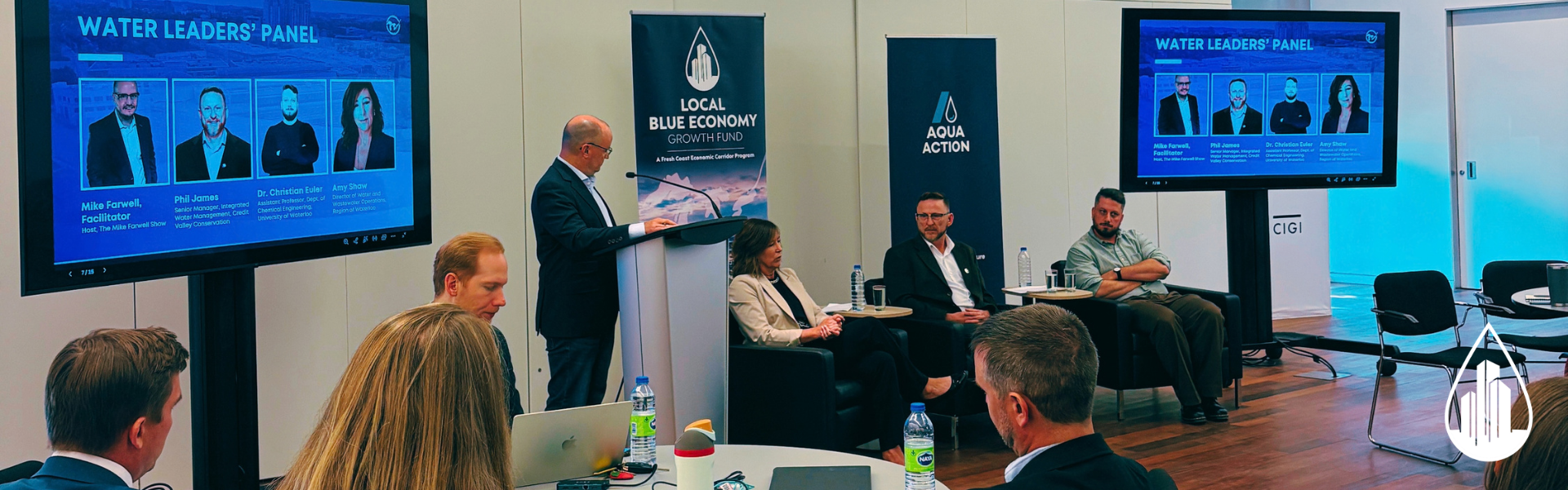
Water Leaders’ Panel (L to R): Facilitator, Mike Farwell; Amy Shaw, Director of Water and Wastewater, Region of Waterloo; Phil James, Senior Manager of Integrated Water Management, Credit Valley Conservation; Dr. Christian Euler, Associate Professor, University of Waterloo.
Regulatory roadblocks, outdated policy frameworks, public perception, risk aversion, and a lack of standards emerged as recurring barriers to innovation. The difficulty of clearly quantifying and communicating the long-term cost and time savings associated with adopting new approaches for municipalities and their constituencies was also seen as a barrier.
But these barriers are not insurmountable.
As panelist Dr. Christian Euler noted, regulatory sandboxes can create opportunities to test and validate new technologies in real-world settings. Building stronger pathways for two-way communication between innovators and regulators can also help build mutual understanding and, ultimately, create the conditions for policy and regulatory change.
And while the floodgates to innovation may not be wide open just yet, innovation is already happening across Ontario.
Phil James shared Credit Valley Conservation’s work with its first CSA-approved blue roof that is designed to collect, hold, and release stormwater for non-potable uses. Amy Shaw, the Region of Waterloo’s Director of Water and Wastewater operations, highlighted the Region’s Hydraloop pilot, which is testing greywater reuse technology in residential homes.
These examples demonstrate what is possible when municipalities, innovators, researchers, and other partners are willing to test new approaches to longstanding water challenges.
From conversation to practical solutions
The MIX also provided municipal staff, utilities, and water professionals with the opportunity to connect with AquaAction innovators working on solutions to water challenges including phosphorus and nutrient management, PFAS and microplastics, and greywater and resource recovery and reuse.
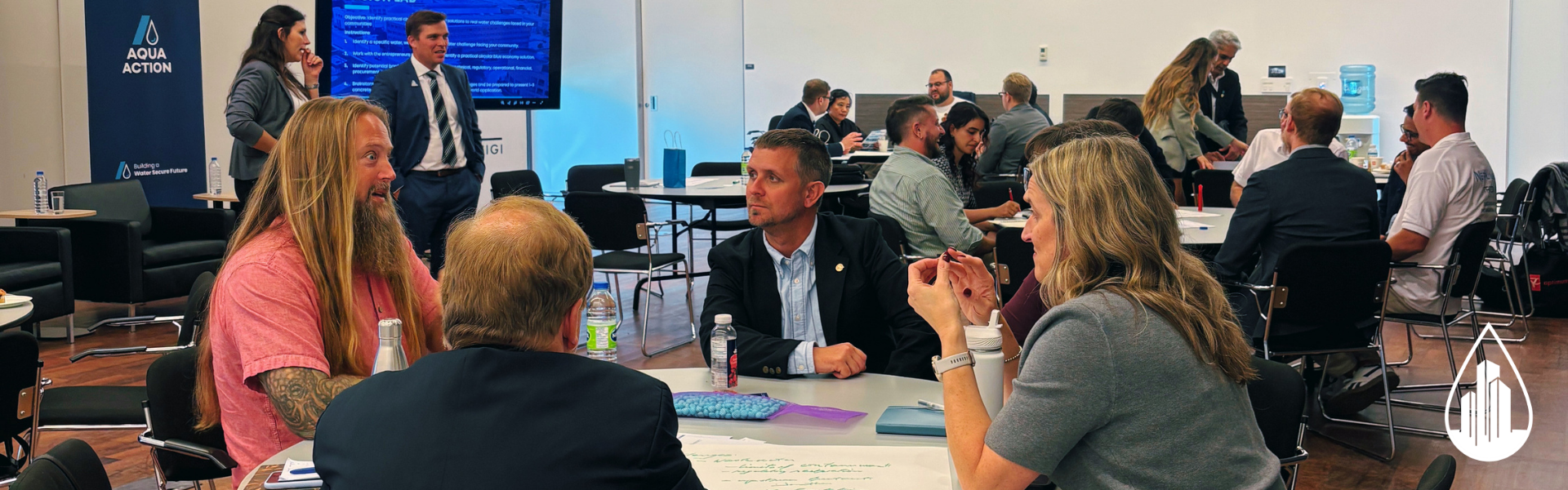
During the afternoon’s Innovation Exchange and Circular Economy Design Lab, municipalities worked together with AquaAction innovators to explore practical ways of overcoming the challenges they are facing. They identified several opportunities to help move water innovation forward:
- Better accounting for the forecasted costs and savings associated with innovative approaches
- Plain-language communication and meaningful public consultation to build understanding and support
- Greater cross-jurisdictional knowledge sharing so communities can learn from one another
- Stronger partnerships between municipalities, academia, industry, and innovators
- More incentives and opportunities to test and demonstrate technologies in real-world settings
The message was clear: Innovation needs an environment that supports experimentation, builds confidence, shares knowledge, and creates pathways for promising solutions to be adopted.
One step forward: The Local Blue Economy Growth Fund
Advancing the circular blue economy will take more than good ideas. It will take creating space for people who are willing to test new and unvalidated approaches, partnerships to support project delivery, and policies, regulations, and systems redesigned to make room for change.
The Great Lakes and St. Lawrence Cities Initiative and the Local Blue Economy Growth Fund are taking the first steps toward creating that space. By providing funding to help de-risk innovative pilots, the Growth Fund gives communities an opportunity to test new approaches and demonstrate what is possible.
Through opportunities for knowledge sharing and cross-sector dialogue, we are helping connect municipalities, industry, academia, First Nations, and other partners to advance solutions together. And by listening to communities and gathering insight into the barriers they face, we are guiding the policy and advocacy work needed to create the conditions for innovation to take hold. Together, with funding support from the Government of Ontario, we are helping to create the necessary conditions for practical, collaborative change in water innovation across Ontario.
Municipal Exchange Events in Waterloo and Kingston
August 27, 2026
Join us this September for two Municipal Innovation Exchange events in Waterloo and Kingston, supported by the Local Blue Economy Growth Fund. Municipal leaders, stormwater and wastewater managers, innovators, and researchers will come together for two half-day events exploring the circular blue economy, greywater reuse, wastewater resource recovery, and new pollution capture technologies and approaches.
Municipal Innovation Exchange (MIX) events create space for cross-sector and cross-jurisdictional dialogue on water quality and quantity challenges facing Ontario communities. Bringing together municipal leaders, stormwater and wastewater professionals, First Nations, researchers, industry leaders, technology innovators, and government partners, MIX events connect the people shaping the future of freshwater in the Great Lakes and St. Lawrence River Region.
 |
 |
|
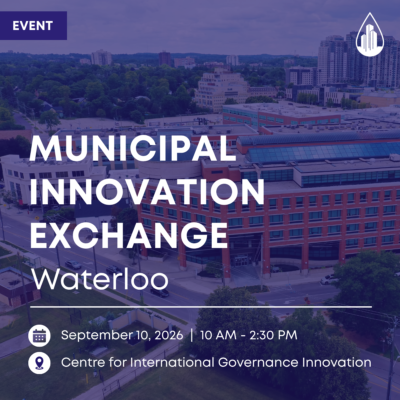
MIX Waterloo – The Circular Blue Economy September 10, 2026 | Centre for International Governance Innovation Municipal Innovation Exchange Waterloo will explore growing pressures on water quantity across the region, underscoring the need for new approaches to water stewardship, conservation, and resource recovery. The event will explore the circular blue economy, highlighting new greywater recovery mechanisms and technologies that can help municipalities transform stormwater and wastewater resources into valuable assets. By fostering collaboration between municipalities, innovators, researchers, and First Nations, the event aims to advance new partnerships and practical solutions to real-world problems. |
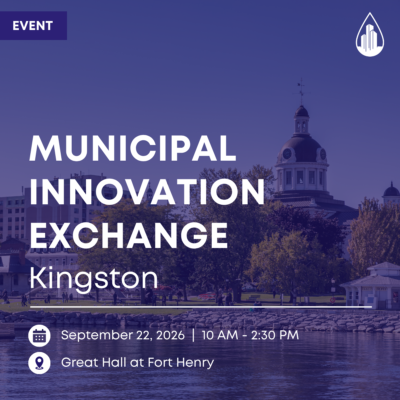
MIX Kingston – Improving Great Lakes Water Quality September 22, 2026 | Great Hall at Fort Henry Municipal Innovation Exchange Kingston will bring together municipal leaders, stormwater and wastewater professionals, researchers, First Nations, industry partners, and water technology innovators to explore practical solutions for improving Great Lakes water quality from “fair” to “good.” The event will connect municipalities and First Nations with innovators in the water technology sector and foster discussion around new approaches to reducing and preventing pollutants and contaminants, such as nutrient, road runoff, microplastics, and PFAS, from entering our freshwater systems. |
16 Cutting-edge Water Tech Startups with Innovative Solutions for Ontario Communities
August 8, 2026
Discover innovative solutions to stormwater and wastewater management challenges to support your application to the Local Blue Economy Growth Fund. Our partner AquaAction produced a helpful guide for municipalities and First Nations communities showcasing 16 cutting-edge water tech startups that could help your community in improving water infrastructure, protecting freshwater resources, and building climate resilience.
You can view and download the guide here: https://aquaaction.org/water-tech-solutions-guide-2026
Tackling Blue-Green Algae: From Prevention to Action
July 3, 2026 – Authored by AquaAction
As cyanobacterial blooms affect a growing number of water bodies, municipalities are facing increasingly important challenges, including protecting drinking water intake, managing beach closures, informing residents, monitoring lakes, and reducing phosphorus and nitrogen inputs.
- forecasting conditions that are conducive to blooms;
- using drones to map watersheds and high-risk areas;
- conducting field monitoring and real-time reporting;
- reducing phosphorus, nitrogen, and other contaminants;
- removing algal biomass through non-invasive methods;
- preventing the spread of aquatic invasive species; and
- recovering value from nutrients and collected materials.
https://blog.aquaaction.org/en/aquaaction/cyanobacteria-blue-green-algae-concrete-solutions-to-prevent-monitor-and-act
[top]
Water-Tech Startups Showcase Solutions to Municipal Water Challenges at Nexus H2O
June 8, 2026
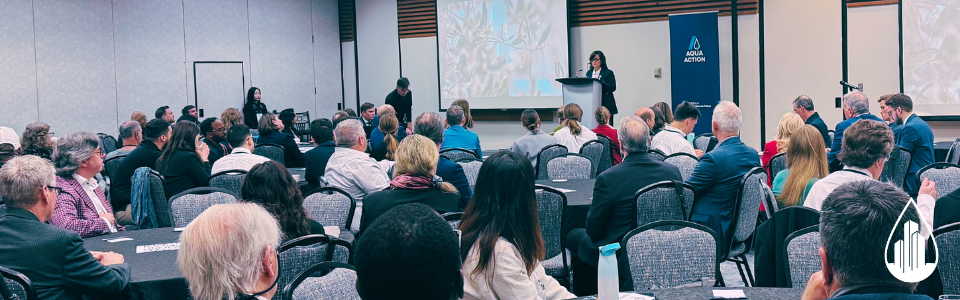
As part of the Local Blue Economy Growth Fund’s (LBEGF) knowledge mobilization program, the Cities Initiative partnered with AquaAction to deliver Nexus H2O—an event designed to connect water-tech entrepreneurs directly with municipal governments to help solve critical stormwater, wastewater, and freshwater quality issues in the Great Lakes and St. Lawrence River Region.
Nestled within Nexus H2O was PitcH2O—an interactive pitch competition for water-tech startups. Eight start-ups stood on the stage with only three minutes to pitch their solutions to the room. Solutions covered innovative approaches to harvesting energy from building wastewater, sustainable absorbents to help with PFAS removal, and modular, biochar filtration systems for treating contaminated water and soil. Several entrepreneurs presented new or advanced methods of capturing and analyzing data using citizen science, machine learning, and AI.
Crowd polling throughout the event confirmed these technologies are needed. Attendees cited data as the second biggest gap in advancing water system improvements, while contaminant capture technologies ranked highest in the polls. Perhaps unsurprisingly, funding was cited as the biggest gap in taking action to improve water quality.
This session highlighted the timeliness and importance of the LBEGF, as well as organizations like AquaAction. The LBEGF’s small grants and knowledge mobilization programs are needed to help advance improvements to Ontario’s freshwater quality—connecting municipalities with entrepreneurs advancing water quality solutions in Canada, while providing project-based funding to pilot, test, and de-risk new and innovative technologies in real-world conditions.
AquaAction helps make these connections possible by providing accelerator programs that seed, mentor, and support entrepreneurs in scaling new technologies and making them accessible to communities that need them. Together, these efforts are helping bridge the gap between innovation and implementation, and further opportunities to engage in similar knowledge-sharing and collaboration sessions will be announced in the coming months.
Discover a some of the innovators from PitcH2O
Capture Tech – An environmental restoration company focused on biochar-based solutions, like its Biochar Capture Packs (BCPs)–a modular filtration system for treating contaminated water and soil.
Sequestro – An advanced materials manufacturing company engineering sustainable adsorbents to remove PFAS from aqueous media.
Chembrains – A pioneer in effluent recycling and contaminant recovery, using a combination of advanced electrochemical, photocatalytic, filtration and oxidation processes to clarify, treat and disinfect water in a closed loop.
E2METRIX – A water treatment technology company specializing in the on-site destruction of PFAS and emerging contaminants by combining concentration, electrochemical destruction, and polishing technologies to mineralize PFAS into non-harmful end products, avoiding long-term disposal liabilities.
Myconaut – Taps into the capabilities of fungi, using Myco Recurrent Selective process and AI/ML to tailor effective and cost-efficient bioremediation solutions targeting PFAS-contaminated soils.
[top]
Ontario Communities and Water-Tech Innovators Connect to Tackle Emerging Water Quality Challenges
June 5, 2026
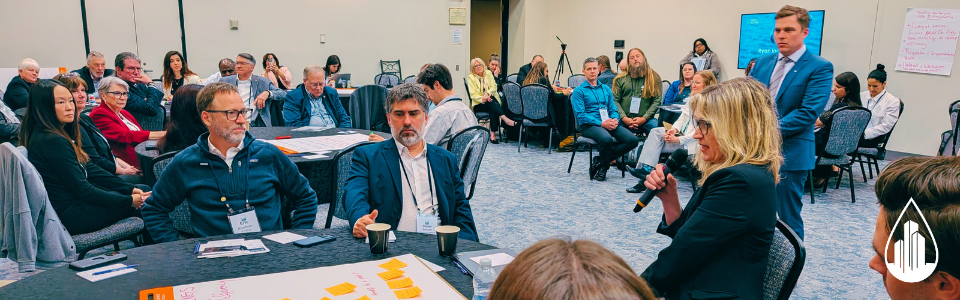
At the first Local Blue Economy Growth Fund Municipal Innovation Exchange, municipal staff, mayors, and industry leaders gathered to discuss opportunities and solutions to some of the most pressing stormwater-wastewater management and freshwater pollution challenges facing Ontario communities.
Municipal representatives highlighted stormwater management as a shared priority, focusing on removing and capturing pollutants and contaminants from stormwater runoff, revitalizing stormwater infrastructure, and tackling emergent contaminants, like PFAS and microplastics.
Innovators from the AquaAction AquaEntrepreneur delegation responded with innovative ideas and technologies that could help municipalities address these rising challenges, such as engineered sustainable absorbents to remove PFAS, electrochemical, photocatalytic filtration and oxidation processes to treat and disinfect water, and even fungi used to target PFAS-contaminated soils.
The session made one thing clear: Canadian innovators are at the forefront of developing promising technologies for addressing pollutants and contaminants to improve freshwater quality. But municipalities cited limited funding and high cost to implement as the primary barriers to putting these solutions into practice.
The Local Blue Economy Growth Fund was designed to help bridge this gap. With up to $50,000 available per project, the Fund helps de-risk the adoption of innovative technologies by supporting pilot projects that allow municipalities to test, evaluate, and demonstrate solutions in real-world settings before making larger-scale investments. The first application intake closes June 19. Learn more about the fund and how your municipality can apply at https://glslcities.org/lbegf/.
[top]